
Materials
PETG, ASA or resin: how to choose
The right material is the one that supports the use of the piece, not the one with the more technical name. Below are the families we work with in the lab and in the store. If your case is in the middle of two, write it in the quote: the choice closes on the file.
Parts from use, not from the catalog
Before you open a price list, answer four questions. Is the piece indoors or outdoors? Does it have to bump, flex, or just hold a shape? Does the tenacity or precision of the surface matter more? Do you need one to try or a small series?
With these answers, PETG, ASA and resin stop being synonymous with "plastic" and become three different roads.
PETG
It is the filament we use when the piece has to work indoors and absorb shocks without breaking at the first assembly. It loses something in stiffness compared to drier materials, and in return forgives more snaps and minor abuses. It is not the choice for an object left in the sun for months.
ASA
It is the family that we indicate on the outside. It holds light and weather better than a filament designed for the office or laboratory. If the piece is on an exposed machine, on an outdoor stand or on a sunbathing casing, ASA should be placed at the top of the list. The printing process is more demanding than PETG: it is an extra reason not to take it for granted on an unprepared machine.
Technical specifications
"Technical" is not a material, it is a family. Inside there are different degrees for temperature, rigidity or contact with substances. For this reason, we do not publish a single card. In the quote, write the temperature, the environment and, if you know it, the polymer you would like to replace. We tell you if a grade we're dealing with fits us, or if the piece needs to be rethought.
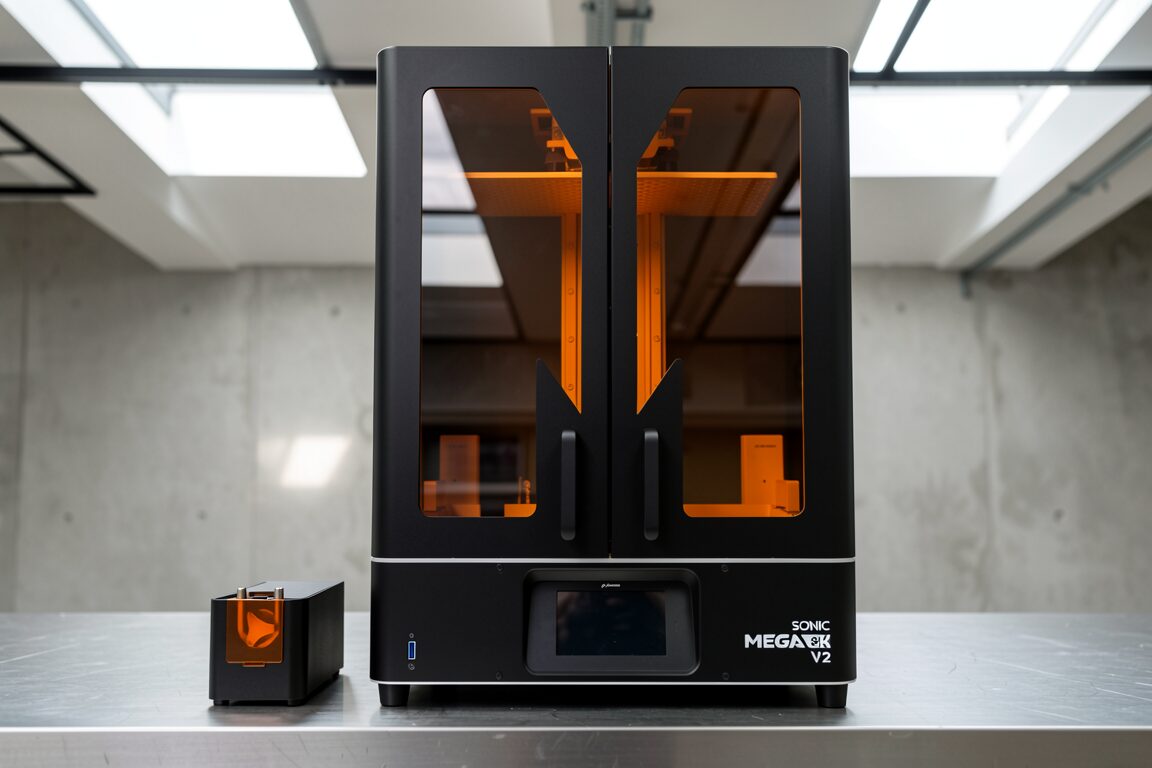
Resin
Resin changes the type of part, not just the finish. The detail is finer and the surface is more closed. In return, the process involves washing and care, and the mechanical behaviour depends on the grade.
- Washable: fine details, with easier cleaning management.
- ABS-like: when the resin prototype must be more tenacious and close to functional use.
- Technique and Ultra: small geometries and pushed finishes. The grade is confirmed after viewing the file, because "ultra" alone does not tell if the piece is a clip or an aesthetic detail.
How to decide in five minutes
- Outside, sun, rain: depart from ASA.
- Inside, bumps, recesses, brackets: parts from PETG.
- Fine detail, small text, surface view: evaluate the resin.
- Temperature, chemistry, extreme rigidity: it is a technical filament, and the degree should be appointed.
- If two answers coexist, send the file and say it. A quote also serves to discard a material.
For drawing the part in filament, the next guide is design for 3D FDM printing. To print the part, go to 3D printing service for third parties.